

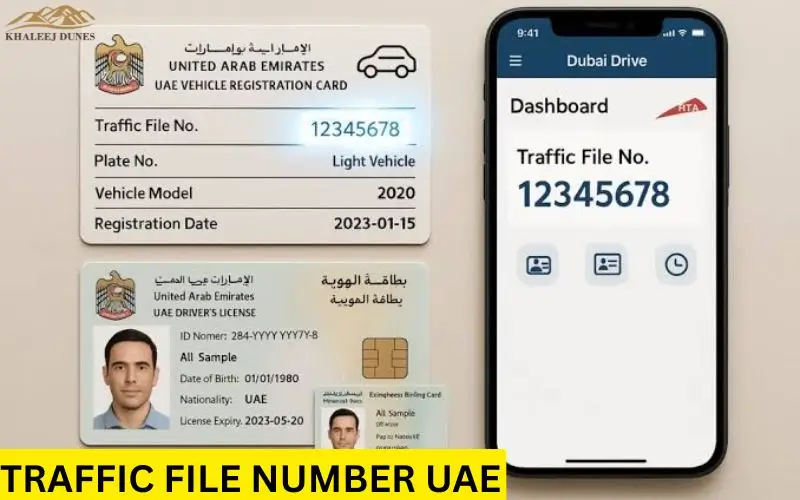
UAE traffic file number might be required when applying for a driving licence, registering a vehicle again or renewing driving documents or traffic fines. Some drivers do not know what it is or where they can get it, resulting in time-wasting in the process of completing online applications. When a driver does not know what this is and they don’t know where to get it it can cause a delay when completing an online application. Thankfully, there are several methods of locating your traffic file number that are easier than some imagine. After learning what it means and where it comes from, you will be able to trust, and complete services of the government.
A traffic file number is a uniquely recorded number put on the driving record of every driver that’s obtained by the issuing authority at the time it’s pulled. Consider it the “driver profile forever” that keeps your official driving record. This identifier is used to retrieve a record of a vehicle and the vehicle’s owner when the licence or record of personal information is renewed, or information on the car’s ownership is obtained such as when registering a vehicle, paying a traffic fine, to update personal details.
Why Is It Important?
Nearly all of the primary driving services rely on your driving profile. If the record is not on hand, the system may not be able to locate your data in a timely fashion, causing a delay and/or request for verification. Your Emirates Motorways (ETMC) traffic file number will be required for several services that you will probably need to do, including:
- To apply for a new driving licence.
- The renewing of an existing licence.
- Registering a vehicle
- Renewing vehicle registration
- Paying traffic fines
- New case number generated. A driving school case file is opened.
- Transferring vehicle ownership
- Replacing a lost or damaged driving licence
Because all these services are connected to one driver profile, keeping your details accurate helps ensure a smoother experience.
How Does a Traffic File Work?
Think of your driving record as a computer spreadsheet.
All information for a driving-related transaction is stored in a folder rather than a record. For instance, you could fill in your profile with information such as:
- Personal identification details
- Driving licence information
- Vehicle ownership records
- Traffic violations
- Black points
- Licence renewals
- Driving test history
- Registered vehicle categories
Who Gets a Traffic File?
A traffic file will usually be established at the beginning of the actual driver’s lawsuit procedure.
- Apply for their first driving licence
- Transfer an eligible foreign licence
- Register a vehicle under their name
- Open a driving school file
- Complete official driver registration procedures
After being created, the driver’s profile is used during the entire licensing process.cIf your licence is renewed or you buy several cars or clear your driving record, your records are always linked to the same traffic file.
Is It Different From a Driving Licence Number?
Yes, and this is one of the most common areas of confusion. Although both numbers relate to your driving records, they serve different purposes.
| Feature | Traffic File Number | Driving Licence Number |
| Purpose | Identifies the driver’s complete profile | Identifies the licence document |
| Connected to driving history | Yes | Limited |
| Used for many online services | Yes | Sometimes |
| Usually remains unchanged | Yes | May change after renewal depending on the issuing authority |
When an online application specifically asks for your traffic file number, avoid entering your driving licence number unless the instructions clearly state they are the same.
How to get traffic file number information?
You should first check your driving licence. This number may be listed on your licence as:
- Traffic File No.
- Traffic File Number
- Traffic Code Number
It is usually printed in conjunction with other licence information and may be easily identified. When a licence is not identified your online driver profile is most likely next.
Where Can You Find Your Traffic File Number?
Upon secure login to driver’s account, you should be able to view your vehicle information, license charges and status, your traffic history, and more, directly on the dashboard. Drivers can get their UAE traffic file number in just a few minutes, without having to go to a customer service centre. Also paper submission has been reduced with online access allowing for significantly less paper-based licence renewals and vehicle services than in the past.
What Information Is Linked to Your Traffic File?
Your traffic profile stores much more than a simple identification number.
| Record | Purpose |
| Driver information | Personal identification details |
| Licence status | Active, expired, suspended, or renewed |
| Vehicle registrations | Vehicles registered in your name |
| Traffic violations | Paid and unpaid fines |
| Black points | Recorded driving offences |
| Driving categories | Vehicle classes you are licensed to drive |
| Renewal history | Previous licence renewals |
Because all of these records remain connected, authorities can process many services much faster than if separate records had to be created every time.
Why Drivers Should Keep Their Information Updated
Your driver profile will remain current and updated with contact, identification and even licence information in case something changes, so there will be no delays with renewals, vehicle registration or the transfer of ownership. Typographical mistakes and inaccuracies, like missing phone numbers or incorrect details, can lead to delays in the verification process and necessitate further evidence. Having up-to-date records will improve time savings and the process of getting key notifications to you.
When will you use your traffic file number?
The system verifies your driving history before processing a request, whether you’re applying for a new licence or renewing an existing one. Your UAE traffic file number might be required when you undertake services like licence renewal, vehicle registration, change of ownership, new licence, updating personal information, paying traffic fines, or booking driving tests, among other things, when you apply for a driving school file or new driving registration. It’s easier to complete an application without having to re-enter the information if it is provided beforehand and there is less risk that it will be sent to someone with incorrect details.
Can You Recover It Without Your Driving Licence?
A copy of your driver profile is saved onto the licensing system where you can get your details once you’ve proved that you are you. Normally, drivers can get this information after signing up for the official driver portal with their digital credentials.
Upon authentication, the dashboard typically will display critical information such as:
- Driver profile
- Licence status
- Vehicle records
- Fine history
- Driving licence details
Traffic file information This eliminates the need to visit a customer service centre for routine enquiries.
Does the Number Ever Change?
The traffic file will rarely have to be assigned to a different driver, although licence cards might need to be renewed on a periodic basis and some document numbers may be worked out. This means that there is no need to worry about authorities losing track of a person’s driving history, even if there are multiple renewals of a driver’s license. With the profile linked over time, all records, such as driving test results, traffic fines, cars owned, and licence renewals can be retrieved under one account.
What Happens If Incorrect Information Is Entered?
If the wrong traffic file number is entered, it can cause unwarranted complications.
Depending on the services being requested, an application might not complete or might be able to interface with another driver’s record, thus blocking the transaction.
Common problems include:
- Verification failure
- Delayed application processing
- Failure to find records of the licence.
- Registration errors
- Additional identity checks
That’s why it is always worth checking each digit before electronically digitising an application form.
Traffic File vs Driver Profile
Many people use these terms interchangeably, but they are not the same.
The traffic file is the official record created by the licensing authority, while the driver profile refers to the collection of information stored inside that record.
Think of it this way:
| Traffic File | Driver Profile |
| Unique identification record | Information stored within that record |
| Created when driver registration begins | Updated throughout your driving history |
| Used to retrieve records | Contains licences, fines, renewals, vehicles, and other driving information |
Understanding this distinction helps when reading official instructions or completing digital applications.
Information Stored in Your Driver Record
A traffic file is like your driving activities’ main central database.
This works by updating just one profile when anything changes rather than saving different files for each service. The following are typically associated with the information in the record:
- Personal identification details
- Driving licence status
- Vehicle categories
- Licence issue and expiry dates
- Traffic offence history
- Black points
- Vehicle ownership records
- Renewal history
- Driving test results
- Application history
Common Reasons Drivers Search for Their Traffic File
The statistics of searches indicate that the vast majority of individuals are searching for their traffic file when they have to use another type of service rather than just being curious. The most common are:
- Renewing a driving licence before it expires.
- Registering a newly purchased vehicle.
- Paying outstanding traffic fines.
- Replacing a lost or damaged licence.
- Updating personal information after document changes.
- Fulfilling employers/excess requirements.
- Opening of files at the driving school.
- Ensuring licenses are verified before travel.
Being aware of its location makes it easier to prevent disruptions of these processes.
Is It Safe to Share Your Traffic File Number?
An individual’s license number is not as important as their banking details, but it is included with their official driving information. It should only be provided in the context of authorized government services, licensed driving institutes, insurance companies that have a valid need for it, and authorized vehicle-related transactions. Don’t post an image of your driving license or other personal information on social media or with strangers who promise fast processing.
Digital Services Have Made Driver Management Easier
The notion of digital transformation has over the last few years shifted the way drivers operating for businesses and personal vehicles track their records. Many services used to take advantage of lengthy queues or filling multiple paper forms are now available and can be initiated within minutes from the onset online. Drivers can access vehicle history and be able to know when their licence is running out, perhaps pay, verify license details etc, without needing to open multiple accounts. This streamlined approach saves time and renders routine services much easier and more convenient than they are in any instance through face-to-face interactions.
What if it’s a duplicate Traffic File?
A driver who is legally licensed should only have one traffic file during their driving history. But, sometimes duplicate files can be created by administrative errors, data input mistakes or changes during changes or while converting licence or updating residency. Don’t overlook the problem if you think there’s more than one file that belongs to you. Having multiple records can lead to an issue when renewing your licence, registering the vehicle, or paying fines (due to info being held under 2 profiles). Best practice is to contact the relevant licensing authority for ID documents. Once verified, these records can typically be read and amended if needed.
How New Residents Receive a Traffic File
Folks coming from another country are frequently uncertain whether they have an existing traffic file or if a new one is being created for them. A traffic file is opened for most newly arrived residents when they start the formal process of driving. This could occur when applying for a first licence, converting an eligible foreign licence or registration with an approved driving institute.
Now that the application is approved, the driver’s profile becomes the main record of all the driving services rendered by the driver. In most cases, the authorities check the eligibility of the applicant before the issuance of the required procedures if a licence conversion is available.
Does Vehicle Ownership Affect Your Traffic File?
Traffic fines won’t affect you if you own a car or multiple cars. Rather, all vehicles registered in your name are associated with the same driver profile. This means that it is more convenient to oversee registrations, renewals, transfers of ownership and traffic-related records from a single location. When one sells a vehicle, it is updated on their vehicle registration record but not their traffic record.
How Traffic Violations Are Connected
When processed and reported to the appropriate authorities, traffic violations will be documented on your driver profile.
These records can contain:
- Traffic fines
- Black points
- Driving violations
- Payment history
- Offence records
These details will link back to your traffic data which means that authorities can easily see your driving history the next time you apply to them for services relating to your licence or vehicle. By adhering to the traffic rules and regulations, one can ensure that his/her driving record remains clean and make the administrative tasks in the future much easier.
Benefits of Digital Driver Records
Most driver management systems have eliminated many of the documents required for regular maintenance and services. Digital records have several benefits today:
- Faster application processing
- Reduced paperwork
- Improved accuracy
- Easier licence renewals
- Better record management
- Easy driving record information.
These enhancements have led to a more efficient driver service as well as minimized faxing of documents.
Benefits of Digital Driver Records
It is a good practice to consider your traffic file as an important record that you are getting, whether it’s your initial one or a newer one, and maintain it accordingly. Keep copies of your driving records safe, check your licence from time to time, and ensure that your contact details are current. Keep in mind that most of the problems are caused by wrong information and not system problems. Taking the extra time to proofread your information now can save time later.
Final Thoughts
It is important to have your UAE traffic file handy for any driving or vehicle-related service as knowing your traffic file number will save time. It’s best to have the location of the device and make sure your driving documents are easily accessible, rather than looking for them at the last moment. Look at your driving licence if you are unable to find a UAE traffic file number. If no document is on hand then sign up on your official driver account to easily access your driving records safely. You might want to take the time in the first few minutes before you begin any application to check your information to avoid delays and ensure you’re processed without interruptions.
Also Visited:
FAQs
1. What is a traffic file number?
A Driver’s Traffic File Number is a number given to a driver upon the establishment of his/her official driving record. It puts all driving history, licence details, vehicle details and traffic-related services within your reach with a single profile and accessible to the licensing authorities.
2. Where can I find my traffic file number?
It’s generally located on the front of your driving licence. It can be referred to as Traffic File No., Traffic File Number, or Traffic Code Number and may look different based on the issuing authority. You can normally get it via your official driver’s license account if you don’t have your license.
3. Is the traffic file number the same as the driving licence number?
No. These are two different numbers. The traffic file number is your full driver record; the driving licence number is the number on the driving licence itself. Remember not to mix the traffic file number with other numbers, because many online services require the traffic file number.
4. Does my traffic file number change after licence renewal?
In most cases, no. Your traffic file does not expire at the same time as your driving licence; for example if your driving licence is renewed or replaced, your traffic file does not expire at the same time.
5. Can I have more than one traffic file?
Normally, no. There is only one traffic file per driver. In case of duplicate files due to administrative mistakes, the concerned licensing body can verify and either correct the records or credentials or verify your identity and revoke the duplicate.
6. What should I do if I can’t find my traffic file number?
First off, see your driver’s licence. To sign in to your official driver’s account or reach out to the licensing authority that issued your driver’s license, if you do not have access to it. Once your identity is verified, you ought to see the information pertaining to traffic file details.
7. Why is the traffic file number important?
Many services throughout the government are dependent on your Traffic File, such as licence renewals, vehicle registration, transfers of vehicle ownership, applications for driving school, payment of traffic fines and updating driver records. Having easy access to this information will allow you to complete these services more efficiently.