
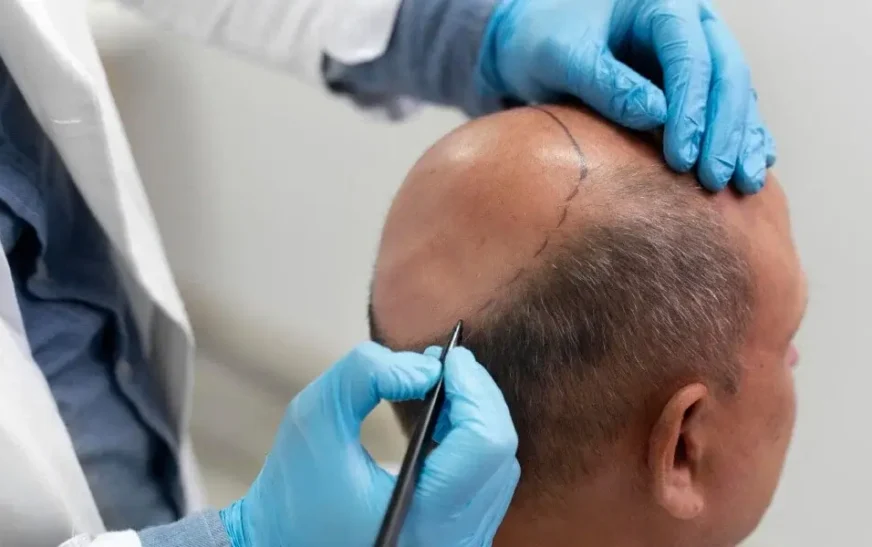
India now performs more FUE hair transplant procedures annually than any country outside Turkey. For international patients, particularly from the Middle East, Southeast Asia, and East Africa, the value proposition is difficult to ignore: board-certified surgeons trained in internationally recognised programmes, FDA-cleared devices, accredited surgical facilities, and costs that are 60 to 75 percent lower than equivalent procedures in Dubai, Singapore, or London.
But cost alone should never drive a surgical decision. This guide breaks down what patients considering a hair transplant in India actually need to evaluate before booking a flight and trusting someone with a scalpel near their scalp.
Why India Has Become a Global Destination for Hair Restoration
Three factors converge to make India a leading destination for hair restoration. First, the country produces roughly 1,200 MCh-qualified plastic surgeons and 3,000 MD/DNB dermatologists every year. The depth of the talent pipeline is unmatched in the region. Second, the infrastructure has matured. Cities like Gurgaon, Mumbai, and Bengaluru now host clinics with laminar airflow operating theatres, German and Korean laser systems, and dedicated post-operative recovery protocols. Third, the cost structure. A fully qualified surgeon in India operates at a fraction of the overhead that drives pricing in the Gulf or Europe, without any compromise on training or technology.
“The gap between Indian and international pricing is not a quality gap. It is an operating-cost gap. Rent, insurance, staffing, and regulatory overhead in Dubai or London inflate procedure costs by 200 to 300 percent without improving clinical outcomes.” — Board-certified plastic surgeon, Delhi-NCR
What a Hair Transplant in India Actually Costs in 2026
| Procedure | India (INR) | India (USD approx.) | Dubai (USD) | London (USD) |
| FUE (2,000 grafts) | ₹80,000 – ₹1,40,000 | $950 – $1,650 | $3,500 – $6,000 | $5,000 – $9,000 |
| FUE (3,000-4,000 grafts) | ₹1,20,000 – ₹3,00,000 | $1,400 – $3,550 | $6,000 – $12,000 | $8,000 – $15,000 |
| DHI (2,000 grafts) | ₹1,50,000 – ₹3,50,000 | $1,750 – $4,150 | $5,000 – $10,000 | $7,000 – $13,000 |
| Body Hair Transplant (BHT) | ₹2,00,000 – ₹4,00,000 | $2,350 – $4,750 | $7,000 – $14,000 | Rarely offered |
| PRP post-transplant (per session) | ₹6,000 – ₹12,000 | $70 – $140 | $350 – $600 | $400 – $800 |
These figures represent all-inclusive pricing at reputable clinics. Patients should be cautious of per-graft pricing models that exclude anaesthesia, facility fees, medication, and follow-up visits. The headline number should always represent the total out-of-pocket cost.
How to Evaluate a Clinic Before You Commit
The single most important factor in a hair transplant outcome is surgeon qualification. In India, the gold standard credential for any surgical aesthetic procedure is MCh in Plastic Surgery, a three-year super-specialisation completed after a general surgery MS degree. This represents six to eight years of post-MBBS surgical training. Patients should verify this credential directly through the Medical Council of India registry.
Five non-negotiable questions to ask any clinic:
First, who physically performs the extraction and implantation? If the answer involves technicians rather than the surgeon, that is a significant red flag. Second, what is your graft survival rate, and how do you measure it? Credible clinics cite 90 to 95 percent survival based on follow-up trichoscopy data. Third, do you perform a donor density assessment before confirming candidacy? Clinics that skip this step risk overharvesting. Fourth, what is included in the quoted price? Medication, follow-up visits, PRP sessions, and revision policies should be explicit. Fifth, can you provide before-and-after photographs of patients with similar hair loss patterns and ethnic backgrounds?
Which Indian Cities Offer the Strongest Clinic Infrastructure?
| City | Strengths | Travel Convenience for Gulf/NRI Patients |
| Gurgaon (Delhi-NCR) | Highest concentration of MCh surgeons; premium clinic infrastructure; proximity to IGI Airport | 3-4 hr direct flight from Dubai/Abu Dhabi; excellent hotel options |
| Mumbai | Established medical tourism ecosystem; large surgeon pool | 4-5 hr flight from Gulf; higher accommodation costs |
| Bengaluru | Strong dermatology network; growing transplant sector | 4-5 hr flight; less medical tourism infrastructure than NCR |
| Jaipur | Cost-competitive; experienced individual surgeons | Requires domestic connection from Delhi for most international patients |
Gurgaon has emerged as the preferred destination for international patients seeking a hair transplant in India largely because of its proximity to Delhi’s international airport, its concentration of board-certified plastic surgeons, and the premium clinic infrastructure available in sectors like 65 and Golf Course Extension Road. Patients from the UAE, in particular, benefit from the short flight time, minimal jet lag, and the availability of same-week consultation-to-surgery scheduling.
The Patient Journey: What a Well-Planned Trip Looks Like
A well-organised hair transplant trip to India follows a structured timeline. Four weeks before travel, the patient completes a video consultation with the surgeon and submits blood work completed at a local lab. This confirms candidacy, sets graft count expectations, and allows the surgeon to design the hairline digitally. One week before, the patient stops blood thinners, alcohol, and biotin supplements per the surgeon’s instructions.
On arrival, day one is reserved for the in-person consultation and final design confirmation. Day two is surgery, typically lasting six to eight hours under local anaesthesia. Day three involves the first post-operative wash at the clinic and a healing assessment. Most patients fly home on day four or five with a detailed aftercare protocol, remote follow-up via video calls, and access to the surgical team via WhatsApp for any post-operative concerns.
The total trip duration is five to six days. The total savings compared to having the identical procedure in the Gulf or Europe range from 55 to 70 percent, inclusive of flights and accommodation.
What International Patients Get Wrong Most Often
The most common mistake is choosing a clinic based on the lowest per-graft price. A clinic advertising ten rupees per graft and quoting 5,000 grafts may sound economical until you realise that inflated graft counts compensate for lower survival rates and that the extraction was performed by technicians without direct surgeon supervision. The second mistake is arriving without pre-operative blood work, which delays surgery and compresses the timeline unnecessarily. The third is ignoring post-transplant care. A transplant is a twelve-month biological process. The surgery is day one. Growth, maturation, and final density unfold over the following year and require ongoing medical support.
Making a Confident Decision
If you are someone in the UAE looking for hair transplant options in India, offers international patients a genuine combination of surgical expertise, modern infrastructure, and significant cost advantage. But the decision should be driven by surgeon credentials and clinical evidence, not price alone. Verify qualifications. Ask for data. Expect transparency. The right clinic will welcome scrutiny because their results justify it.