
A UAE VAT Calculator is a tool that assists businesses, taxable persons, shoppers and freelancers in calculating 5% of Value Added Tax (VAT) on taxable amounts easily. It comes in two modes: calculate VAT on a price before tax, or deductions off a price VAT inclusive. The calculator should calculate at 5%, assuming not all posts are 5% VAT or assuming they are, whereas the standard rate of VAT is 5%. Certain supplies are 0-rated or exempt from VAT altogether. It is easier to understand VAT when you can see just how much of the item’s price is a VAT charge. A VAT calculator can assist you to calculate the amount of VAT on an invoice, the selling price, a quotation or simply to see what the final cost will be if you have to pay it.
The basic rate of VAT is 5%. According to the Federal Tax Authority, VAT is a tax on consumption and is imposed at various stages of the supply chain; the end user generally pays for this. If the transaction is simple direct, with the standard rate, it is a simple calculation. If VAT has not been applied and increases a price by 5%, then the new price is 1,050. AED before adding 5 percent VAT is: AED (1000 – VAT). But the backward calculation of tax when the total price already includes the tax has another formula. One of the most frequent causes of errors is this.
What Is a VAT Calculator?
An UAE VAT Calculator is an online calculation tool that is aimed at working out the amount and final cost from a monetary value, based on UAE VAT regulations. This tool can be used when the price is already known without VAT, but calculating add it yourself, or when the price is known (including VAT) and calculating the breakdown of the original price and the tax.
For instance, if service has a price of AED 2,000 (rab) without VAT. The standard rate is 5% for this which is computed as AED 100 VAT, resulting in AED 2,100 on the bill. The reverse calculation is a little bit different. If the invoice already has the price of AED 2,100 with VAT, then to take 5% of the same would lead to an extra price of AED 105, which is wrong. The VAT amount is 100/110 of AED 2,100 (excluding VAT), as the VAT is already embedded in the amount.
How 5% VAT Is Calculated
The basic VAT calculation depends on whether your starting amount is VAT-exclusive or VAT-inclusive.
For a price before VAT, use:
VAT = Original Price × 5%
Then:
Total Price = Original Price + VAT
For example:
AED 1,500 × 5% = AED 75 VAT
AED 1,500 + AED 75 = AED 1,575 including VAT
For a price including VAT, use:
VAT = VAT-Inclusive Price × 5 ÷ 105
The amount before VAT can then be calculated as:
Net Price = VAT-Inclusive Price ÷ 1.05
This is important for businesses reviewing invoices because the VAT component must be separated correctly from the gross amount.
VAT Calculation Examples
The following table illustrates common standard-rated calculations.
| Price Before VAT | VAT at 5% | Total Including VAT |
| AED 100 | AED 5 | AED 105 |
| AED 250 | AED 12.50 | AED 262.50 |
| AED 500 | AED 25 | AED 525 |
| AED 1,000 | AED 50 | AED 1,050 |
| AED 2,500 | AED 125 | AED 2,625 |
| AED 5,000 | AED 250 | AED 5,250 |
| AED 10,000 | AED 500 | AED 10,500 |
These examples assume the transaction is subject to the standard 5% VAT rate. Not every supply is necessarily standard-rated; some supplies may qualify for zero-rating or exemption under VAT legislation.
How to Add VAT to a Price
Adding VAT is the simplest calculation.
Suppose a company quotes AED 4,000 for a service and the quoted amount excludes VAT. Multiply AED 4,000 by 0.05:
AED 4,000 × 0.05 = AED 200
The customer therefore pays:
AED 4,000 + AED 200 = AED 4,200
An alternative shortcut is to multiply the original amount by 1.05:
AED 4,000 × 1.05 = AED 4,200
This method is useful when preparing quotations, retail prices, invoices, budgets, or project estimates.
How to Remove VAT From a Price
Removing VAT requires more care.
If the total invoice is AED 4,200 and the amount already includes 5% VAT, divide it by 1.05:
AED 4,200 ÷ 1.05 = AED 4,000
The VAT is:
AED 4,200 − AED 4,000 = AED 200
Therefore, the correct breakdown is AED 4,000 before VAT and AED 200 VAT. Do not calculate 5% directly from the VAT-inclusive total when you are trying to extract the tax amount. Five percent of AED 4,200 is AED 210, but that does not represent the VAT contained in AED 4,200.
VAT Inclusive vs VAT Exclusive
The terms “VAT inclusive” and “VAT exclusive” are important when reading prices.
A VAT-exclusive price does not include VAT. The applicable VAT is added to the advertised or quoted amount.
A VAT-inclusive price already contains VAT. The amount displayed is the final price, and the VAT component must be extracted mathematically if you need the net amount.
| Calculation Type | Formula | Example |
| Add VAT | Price × 5% | AED 1,000 → AED 50 VAT |
| Total with VAT | Price × 1.05 | AED 1,000 → AED 1,050 |
| Remove VAT | Gross Price ÷ 1.05 | AED 1,050 → AED 1,000 |
| Extract VAT | Gross Price × 5 ÷ 105 | AED 1,050 → AED 50 |
This distinction is especially useful when comparing supplier quotations. Two businesses may advertise similar prices, but one quotation may exclude VAT while another already includes it.
Who Can Use a VAT Calculator?
A VAT calculator doesn’t just need to be used by an Accountant. It is useful for anyone doing business or purchasing taxable items, with regard to taxable purchases, taxable invoices, or commercial business activities.
Common users include:
- Purchasers comparing the actual price of goods and services.
- Self-employed handling generating and calculating taxes on client invoices.
- When a small business creates an estimate and sales bill of sale.
- VAT checkers going over VAT figures.
- Purchase managers doing price comparisons among suppliers.
- Estimators of project cost and expenses by companies.
- Whether an invoice calculation is correct or not for customers.
As for businesses, it is important to understand that calculation should be used in conjunction with the correct accounting software, tax documentation or pro advice, not in its place.
VAT and Business Registration Thresholds
Calculating VAT on an invoice is a different matter to deciding whether a business is required to register for VAT. According to the Federal Tax Authority, a person will normally register as a resident business if he expects the value of his taxable supplies and imports carried out during the last 12 months or within the next 30 days to exceed AED375,000. Voluntary registration can be considered after taxable supplies/exports importation of goods are more than AED 187,500 according to rules in effect at the time of registration.
This 5% VAT rate is not to be confused with these thresholds. The rate is used to calculate to what amount a transaction is subject to tax, and the registration threshold is largely used to determine if a business needs to register or if it can register. In addition, the FTA states that the taxable supplies of non-resident businesses could also give rise to a requirement for business registration, with rare exceptions being for instances in which the normal threshold was not met.
VAT Registration and EmaraTax
Companies requiring registration to submit applications will be able to make their applications on the Federal Tax Authority’s platform EmaraTax. According to the present service information, VAT registration application is made electronically and does not charge any fees for the service.
VAT registration upon enrolment shall include the registration of a taxable person profile, the check of the conditions for taxable persons’ registration, filling in the application and submission of supporting material. The FTA currently quotes a 20 working day turnaround time from the application being received to completion (the turnaround time may vary depending on type of application and supporting information).
Standard-Rated, Zero-Rated and Exempt Supplies
The most notable fault of a simple VAT calculator is that it is unable to identify the VAT treatment based on the price alone of a transaction. Normal supplies are usually charged with 5% VAT. There are also provisions for zero-rated and exempt supplies in legislation. The FTA needs to clarify that VAT is always the flat rate of 5% unless there is an exemption or a 0% rate applied to the transactions. This will require the user to determine the VAT treatment of the underlying supply before applying the 5% calculation.
Exempt and zero-rated are not synonymous. A zero-rated taxable supply is taxable at 0% while the input tax effects of exempt supplies may be different and may not be part of the normal taxable mechanism. In complex transactions in particular those involving property, financial services, international supplies, imports or similar complex situations with special VAT aspects, professional tax advice might be justified.
Common VAT Calculation Mistakes
For those with an even simpler perspective on VAT, 5% gets easy, but mistakes often are made when people mix up the gross and net figures.
The top errors are:
Out of VAT calculation by applying 5% on the price inclusive of VAT.
- Pre-assuming that all products/services have 5% VAT automatically added.
- Mixing up VAT thresholds and the VAT rate.
- Calculating each line of an invoice incorrectly.
- Receipt of supplies for the purpose of supplying exempt supplies.
- Not remembering that VAT may vary depending on the nature of the transaction.
Besides enabling arithmetic calculations with a calculator, the calculator will not be able to spot a mistake in the underlying VAT treatment, so the basic treatment should still be correct.
VAT for Invoices and Quotations
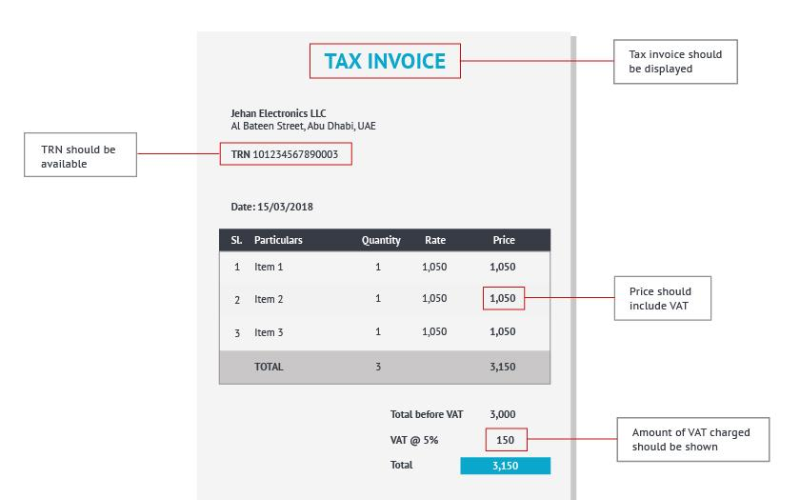
It is important to be clear when making a quotation whether the price will include VAT or not. In this way, conflicts between suppliers and customers are prevented. For instance, an internet quotation might indicate the service cost of AED 3,000, VAT of AED 150 and the total payable of AED 3,150. This helps the customer get a clear breakdown. Other tax-invoice requirements must also be met for VAT-registered businesses. The arithmetic cannot be performed on a calculator; this would not produce a compliant tax invoice nor would it establish whether or not input tax is recoverable.
Why Use Online VAT Calculator?
With a small number of transactions, there is still no better option than manual calculations, but for multiple transactions or situations where comparing prices is done often, an online tool may be more convenient. The difference between the VAT being added and the VAT being removed should be readily apparent from an effective calculator. This should also be structured to show separate columns for Original Quantity, VAT to be paid and Total amount due.
For consumers, this makes it easier to understand the real cost of a purchase. For businesses, it can speed up quotation checks, invoice reviews, budgeting, and basic financial calculations. The Federal Tax Authority itself provides a VAT calculator interface showing fields for the amount before tax, total amount after tax, and 5% VAT.
Final Takeaway
A VAT calculator is a useful tool to use in a fast and quick way to check 5% VAT calculations, to work out prices including 5% VAT, to work out prices exclusive of 5% VAT and to help understand the final price of taxable transactions. The trick is to understand if the amount you enter is after or before taxes.
Simple calculations can be used as a general rule when calculating every day: add 5% to the standard rate price excluding VAT or divide by 1.05 when using the VAT-inclusive price. However, for businesses to comply there is more to it than just calculating. The following rules should be taken into account in the context of VAT registration, tax invoices, the input-tax recovery, filing of VAT returns and classification of supplies: The Federal Tax Authority is the official source of current VAT legislation, requirements and official tax guidance.
Also Visited:
Frequently Asked Questions
What is the general application rate of the value added tax (VAT)?
The General rate of VAT is 5%. There are some transactions for which we can instead have a zero rate or exemption and this should be taken into account when working out the VAT.
How do I calculate 5% VAT on AED 1,000?
Multiply AED 1,000 by 5%. The total cost of the agri-food product is (100+50) AED 1,050, breaking down to AED 50 VAT.
How do I remove 5% VAT from a total price?
To calculate price before VAT subtract the VAT amount from the total, or divide by 1.05. For example, AED 1,050 ÷ 1.05 = AED 1,000.
Is VAT always 5%?
No. The standard rate is 5%, although some supplies may be zero-rated or be exempt (under the relevant VAT legislation).
What is the mandatory VAT registration threshold?
The mandatory registration typically applies to resident businesses if the taxable supplies and imports are in excess of AED 375,000 during the last 12 months and expected to exceed AED 375,000 during the next 30 days.
Is a business able to elect to be registered for VAT?
Yes. Taxable supplies, imports or qualifying taxable expenses of a resident business exceeding AED 187,500 are generally sufficient for registration to be considered voluntary.
Is a VAT calculator an alternative to an Accountant?
No. A calculator is a tool for mathematical calculations not for deciding on the correct treatment of VAT, their own registration obligations, for drawing up the compliant tax documentation and for giving tax professional advice. In more complicated situations, businesses should seek the advice of experienced tax specialists or the official guidance of the FTA.
Disclaimer
VAT rules can change through legislation, executive decisions, and FTA guidance. For compliance decisions, verify the latest requirements directly with the Federal Tax Authority