
Industrial Overview
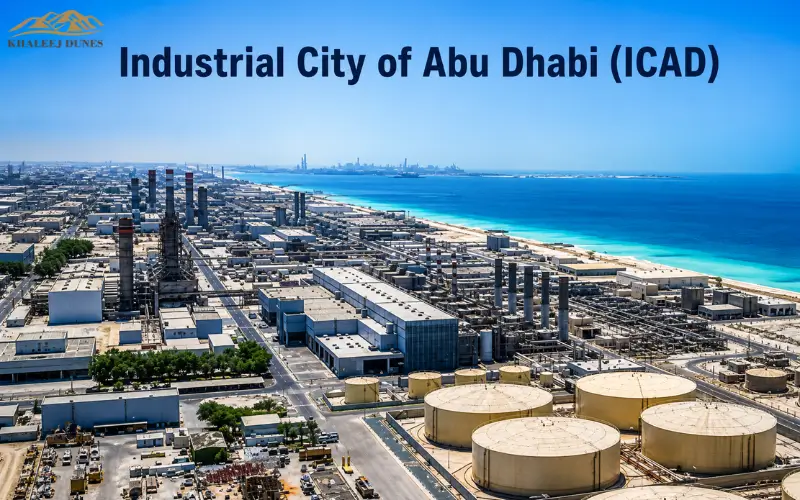
Industrial City of Abu Dhabi is a large-scale industrial ecosystem that is intended to help the industries of manufacturing, engineering, and logistics. ZonesCorp manages it and is a framework of an organized environment where industries have zoned environments that are maintained by innovative infrastructure.
The zone is also situated in the Musaffah area, which has the advantage of being close to ports and airports; hence, it suits businesses that rely on efficient logistics. Its scalability and regulatory facilitation, coupled with strong connectivity, have made it a favorite destination among investors.
Overview
| Category | Details |
| Location | Musaffah, near Abu Dhabi |
| Developed By | ZonesCorp |
| Type | Industrial Zone / Free Zone |
| Total Zones | 5 (ICAD I to ICAD V) |
| Key Facilities | Warehousing, utilities, transport, worker accommodation |
| Setup Cost | Starts from approx. AED 12,075 |
| Ideal For | Industrial businesses, factories, logistics companies |
Zone Structure
The Abu Dhabi Industrial City is planned as a city consisting of five specialized zones such that each zone is appropriate to host certain industries. This organized zoning assists businesses in running smoothly with the appropriate infrastructure and regulatory assistance.
ICAD I – Relates to conventional industries like steel, engineering, and mass production.
ICAD II -This is developed to suit any medium-scale industries such as chemicals, plastics and construction materials.
ICAD III– Promotes light industries such as assembly, logistic and processing units.
ICAD IV– It focuses on the manufacturing industries that are technologically-based.
ICAD V – Specialized in automobiles and vehicles.
This zone planning makes sure that every industry performs in the right environment with maximum facilities and few conflicts in operation. 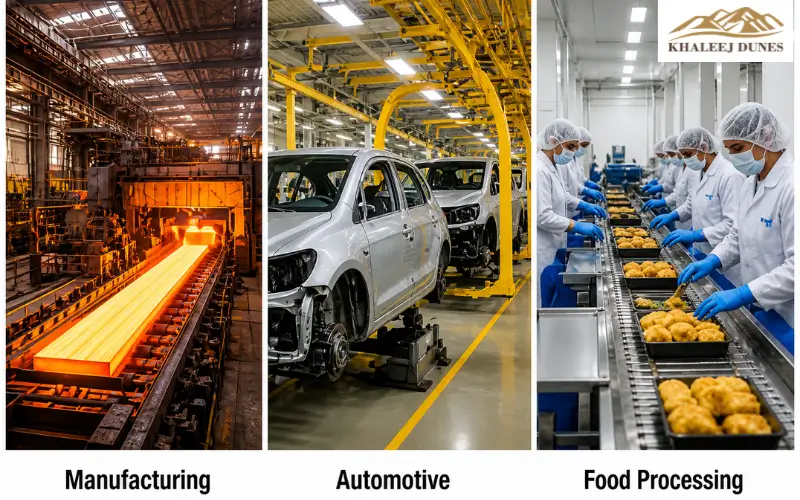
| Zone | Focus | Activities |
| ICAD I | Heavy Industry | Engineering, steel, processing |
| ICAD II | Medium Industry | Chemicals, plastics |
| ICAD III | Light Industry | Assembly, logistics |
| ICAD IV | Tech | Innovation and light manufacturing |
| ICAD V | Automotive | Vehicle-related industries |
This structured zoning approach helps businesses operate without infrastructure limitations while maintaining regulatory compliance.
Zones Location
| Zone | Location Focus | Nearby Access |
| ICAD I | Central Musaffah Industrial Area | Close to main highways |
| ICAD II | Extended Musaffah zone | Easy access to logistics routes |
| ICAD III | Outer industrial corridor | Near transport and storage hubs |
| ICAD IV | Developing industrial extension | Connected to new infrastructure |
| ICAD V | Southern industrial expansion | Linked to automotive sector routes |
The zoning of the Industrial City of Abu Dhabi is strategically situated in the city of Musaffah to facilitate easy access to highways, ports and logistics networks to facilitate efficient industrial activities.
Transport
| Mode | Key Access | Purpose |
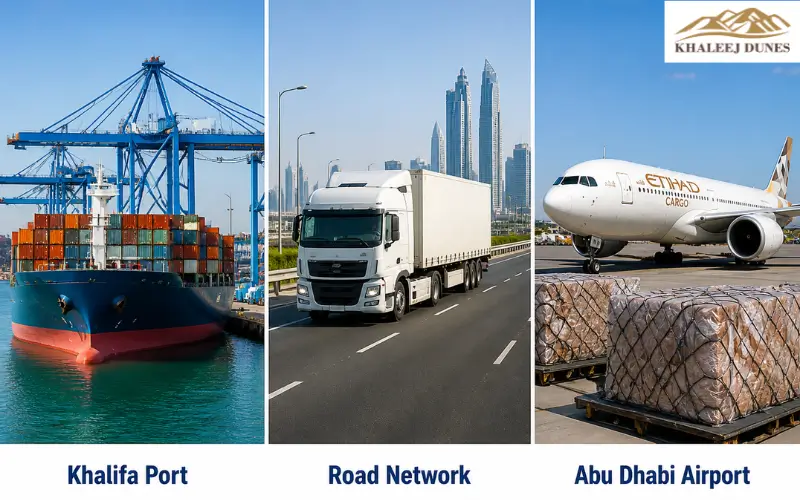
| Road | Major highways (E11, E30) | Smooth movement of goods and trucks |
| Sea | Khalifa Port | Import and export operations |
| Air | Abu Dhabi International Airport | Fast cargo and urgent shipments |
| Internal | Industrial road network | Efficient in-zone logistics |
Industrial City of Abu Dhabi is endowed with a well-structured transport system that facilitates industrial activities on time. Its road system is designed to host heavy-duty cars guaranteeing super easy logistics within and outside the zone.
The closeness of port and airport facilities enables businesses to efficiently manage both bulk and time-sensitive deliveries at a lower cost on high supply chains and enhances the speed of delivery.
Business Setup Process
Establishing a company within the industrial zone is a process. Every step was to be followed strictly to make sure that the regulations are followed and it needed no problems to pass.
The steps involved start by determining what your business activity is about. Once the type of activity is chosen, it becomes necessary to identify what a company is in terms of legal form.
When the structure is complete, the company name has to be registered. This is based on the use of a distinctive trade name which is selected and approved by the concerned authority. The approval of names is followed by the submission of documentation and an application for licenses by businesses.
The assessment of approvals is done by authorities and documents are checked and approved granted depending on the compliance. The company, after getting the license, can operate legally in the industrial zone.
Process Step by Step
- Choose business activity, regarding industry type.
- Determine legal structure and model of ownership.
- Reserve and register trade name.
- Place application together with necessary documents.
- Get an industrial license and approvals.
This process is made easy by the industrial city of Abu Dhabi which provides systematic guidance and assistance using setup consultants and authorities.

Required Documents
Recording is an important aspect of the company formation. Missing or wrong documents may result in delays in approvals and more time setting up.
Firms must provide identification, legal, and admission forms. These documents confirm ownership, line business structure and enhance regulatory compliance.
Required Documents List
- Shareholders – copies of passports.
- Lease agreement of business premises.
- Board resolution (where appropriate)
- Power of attorney: Signed by a notary.
- CV/profile of manager.
Provision of correct and full documentation guarantees easy passage of approval and no unjustified delay.
Business Establishment Cost
There are various elements of costs in starting up a business based on the nature and size of operation. Depending on the situation, the base set-up cost will usually begin at AED 12,075 which comprises of other necessary elements of registration and licensing.
Nevertheless, the total costs may fluctuate depending on the needs of the office, amount of visas and other services.
Cost Breakdown Table
| Cost Component | Estimated Cost (AED) | Description |
| Trade License | 5,000 – 8,000 | Business activity approval |
| Registration Fee | 2,000 – 3,500 | Company incorporation |
| Office / Lease | 3,000 – 15,000+ | Virtual or physical workspace |
| Documentation | 1,000 – 2,500 | MOA, legal paperwork |
| Visa & Immigration | 3,000 – 7,000 per visa | Employee/resident visas |
| Consultation | 500 – 2,000 | VAT and advisory services |
Estimated Total Starting Cost: AED 12,075+ (can increase depending on requirements)
The industrial city of Abu Dhabi provides flexibility, allowing businesses to scale costs based on operational needs and expansion plans.
Infrastructure and Facilities
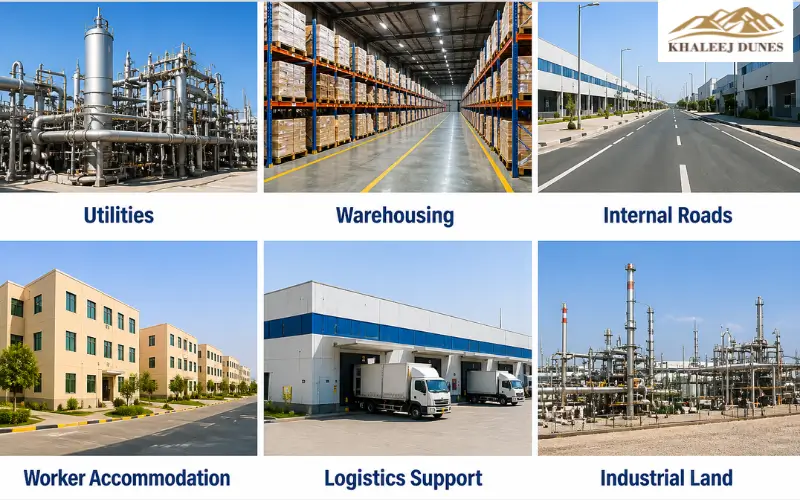
The industrial zone is designed with modern infrastructure to support a wide range of industries. Businesses benefit from ready-to-use facilities that reduce setup time and operational challenges.
| Facility | Description |
| Utilities | Continuous electricity, water, and gas supply |
| Transport | Road networks for industrial logistics |
| Warehousing | Storage and distribution units |
| Accommodation | Worker housing facilities |
| Logistics | Integrated supply chain systems |
These facilities allow companies to focus on production and growth rather than infrastructure development.
Industries and Opportunities
Various industries that help in economic growth are supported by the industrial ecosystem. These involve manufacturing, construction, automotive and logistics industries.
An integrated supply chain helps companies in that raw materials, production and distribution are well linked. This minimizes inefficiencies in operations and enhances productivity.
New industries, including renewable energy and modern manufacturing technologies, also have an opportunity in the industrial sphere.
Strategic Importance
Diversification of the economy mainly depends on industrial development. The industrial zone helps to strengthen non-oil sectors and provide jobs, as they support manufacturing and logistics.
It is a key element of the industrial policy of the UAE due to its location and infrastructure. Companies in operation here enjoy the local and international markets.
The industrial city of Abu Dhabi has remained a contributor of longs term economic stability and industrial growth.
Conclusion
Abu dhabi, being an industrial city, has provided a well-organized and efficient business environment to those planning to open new industrial activity or even expansion. It has everything required to do business as it has zoning and infrastructure up to streamlined setup procedures.
Its strategic position, the latest facilities, and favorable regulatory environment make it one of the most significant industrial centers in the UAE.
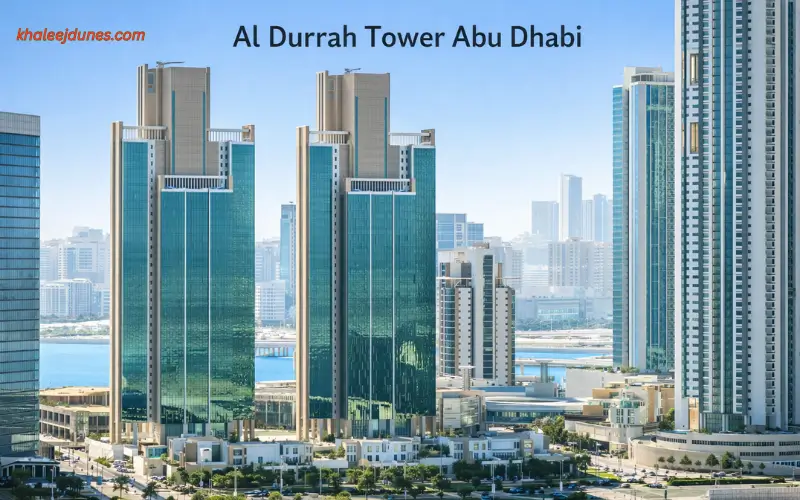
Also like to Visit: Al Durrah Tower Abu Dhabi
FAQs
1. What is the name of the Industrial City of Abu Dhabi?
It is a significant industrial hub, which is meant to accommodate manufacturing and logistics industry.
2. What needs to be set up?
It requires passport copies, lease agreement, board resolution and legal authorizations.
3. What is the lowest cost of entering into a business?
Its initial price is about AED 12,075, varying according to business needs.
4. What is the duration of registration?
Typically, it takes a couple of weeks when all the documents are in place.
5. Is it possible for foreigners to open a company here?
Yes, foreign investors are free to set up business as per approved structures.
6. What industries are allowed?
The allowed industries include manufacturing, logistics, automotive, and engineering.
7. What is the importance of ICAD?
It facilitates economic diversification, the creation of jobs, and the growth of industry.