
IVF has changed the way fertility specialists evaluate embryos before pregnancy. In addition to helping couples achieve pregnancy, modern IVF can provide an opportunity to examine embryos for certain chromosomal abnormalities. This process can help doctors identify embryos that are more likely to have the expected number of chromosomes before an embryo transfer.
Chromosomes carry genetic information that guides the development of the human body. Most healthy human cells contain 46 chromosomes arranged in 23 pairs. However, some embryos may have an extra or missing chromosome. These changes can affect embryo development, implantation, pregnancy, or the health of a child.
For couples considering IVF in Dubai, understanding embryo chromosome testing can make the treatment process easier to understand. It is also important for people researching Gender Selection IVF because chromosome testing and embryo sex determination can involve related laboratory procedures, although they have different purposes.
What Are Chromosomal Abnormalities?
Chromosomal abnormalities occur when an embryo has an unusual number or structure of chromosomes. One of the most common types is called aneuploidy. It happens when an embryo has an extra chromosome or lacks one.
For example, trisomy 21 means that an embryo has three copies of chromosome 21 instead of two. This is associated with Down syndrome. Other chromosome changes may prevent an embryo from developing normally.
Not every embryo created during IVF will have the same chromosome profile. In fact, the likelihood of aneuploid embryos can increase with maternal age. However, age is not the only factor. Egg quality, sperm factors, embryo development, and other biological factors can also influence chromosome health.
Therefore, fertility clinics may discuss embryo genetic testing with selected patients when it could provide useful information for treatment planning.
What Is PGT-A?
Preimplantation genetic testing for aneuploidy, commonly called PGT-A, is a laboratory technique used to assess embryos for chromosome number abnormalities before transfer.
During IVF, eggs are collected and fertilized with sperm in a laboratory. The resulting embryos are monitored as they develop. When an embryo reaches the appropriate stage, specialists can remove a small number of cells from its outer layer.
The sample is then examined using genetic testing technology. The embryo itself remains in the fertility laboratory while the testing takes place. Depending on the clinic and treatment plan, embryos may be frozen while the laboratory completes the analysis.
PGT-A does not test every possible genetic condition. Instead, it mainly looks for chromosome number changes. Therefore, patients should discuss exactly what the test can and cannot identify with their fertility specialist.
How Does Chromosome Testing Work During IVF?
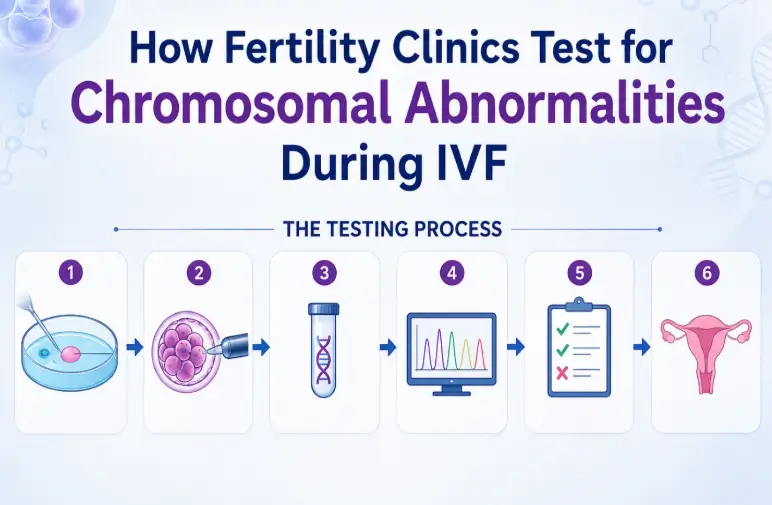
The testing process generally takes place over several stages. Each stage has a specific purpose and requires careful laboratory handling.
1. Ovarian Stimulation
The IVF cycle usually begins with medication that encourages the ovaries to develop multiple follicles. Doctors monitor follicle growth using ultrasound scans and, when needed, hormone tests.
The aim is to retrieve several mature eggs rather than relying on a single egg. However, the number of eggs collected varies from one patient to another.
2. Egg Collection and Fertilization
Once the follicles reach the appropriate stage, the fertility team collects the eggs through an egg retrieval procedure.
The eggs are then fertilized with sperm in the laboratory. Depending on the circumstances, the laboratory may use conventional IVF or intracytoplasmic sperm injection, known as ICSI.
The fertilized eggs begin developing into embryos. Embryologists monitor their progress over the following days.
3. Embryo Development
Embryos continue developing in controlled laboratory conditions. Embryologists evaluate their development and identify embryos that reach the stage suitable for biopsy.
At this point, the embryo contains many cells. A small sample can be removed from the outer cell layer without removing cells from the developing inner cell mass that forms the fetus.
4. Embryo Biopsy
Embryo biopsy is a delicate laboratory procedure. An embryologist carefully removes a small number of cells from the embryo.
The cells are prepared for genetic analysis and sent for testing. Meanwhile, the embryo is commonly cryopreserved using modern freezing techniques.
The biopsy itself does not provide a complete picture of every genetic feature of the embryo. Instead, it provides a sample that can be analyzed for the specific genetic or chromosomal information included in the test.
5. Genetic Laboratory Analysis
The biopsy sample undergoes genetic analysis. For PGT-A, the laboratory examines the chromosome content of the sample.
The results may classify embryos according to their chromosome findings. An embryo may be described as euploid when the tested cells show the expected chromosome number. An embryo may be classified as aneuploid when the analysis identifies an abnormal chromosome number.
Some results can be more complicated. For example, mosaic findings may indicate that different cells in the tested sample have different chromosome profiles. Such results require careful interpretation by a fertility specialist and genetic professional.
What Is the Difference Between PGT-A and Gender Selection IVF?
PGT-A and Gender Selection IVF are related to embryo testing, but they are not the same procedure.
PGT-A focuses mainly on identifying chromosome number abnormalities. The objective is to provide information about the chromosome status of an embryo before transfer.
Gender selection involves identifying the sex chromosome information of an embryo. In IVF programs where this service is legally and clinically available, genetic testing may identify whether an embryo has XX or XY chromosomes.
Therefore, a patient may hear about chromosome testing and sex selection during the same IVF discussion, but the medical goals are different. One focuses on chromosome abnormalities, while the other involves identifying embryo sex.
The availability and permitted use of embryo sex selection can depend on local laws, medical indications, and clinic policies. Couples in Dubai should discuss these requirements with a qualified fertility specialist before making treatment decisions.
Why Do Fertility Clinics Consider Chromosome Testing?
Chromosome testing can provide additional information when selecting embryos for transfer. However, it is not necessary or appropriate for every IVF patient.
A fertility specialist may discuss PGT-A when factors such as maternal age, repeated pregnancy loss, previous IVF outcomes, or other reproductive considerations make additional embryo information relevant.
For some couples, the test may help reduce the likelihood of transferring an embryo with certain chromosome abnormalities. It may also help doctors understand the number of embryos available for transfer after testing.
Nevertheless, PGT-A should not be viewed as a guarantee of pregnancy or a guarantee of a healthy baby. A pregnancy can still face complications even when an embryo has a normal PGT-A result.
What Do PGT-A Results Mean?
Understanding genetic test results requires professional interpretation. A simple result such as euploid or aneuploid may appear straightforward, but reproductive genetics can be more complex.
A euploid result generally means that the tested embryo cells showed the expected number of chromosomes. Such embryos may be considered for transfer based on the overall treatment plan.
An aneuploid result indicates that the tested cells showed a chromosome number abnormality. Many embryos with these findings may have a lower chance of developing into a healthy pregnancy.
Mosaic results require additional discussion. A mosaic embryo may contain a mixture of cells with different chromosome findings. The significance of mosaic results can depend on the chromosomes involved, the level of mosaicism, and laboratory reporting methods.
For this reason, patients should avoid interpreting genetic reports without guidance from their fertility specialist or a qualified genetic counsellor.
Can Chromosome Testing Improve IVF Outcomes?
Chromosome testing may provide useful information, but it does not automatically increase the chance of success for every patient.
One potential benefit is that it can help identify embryos with chromosome abnormalities before transfer. This may be particularly relevant for patients who produce several embryos and want additional information when deciding which embryos to transfer.
However, the value of PGT-A varies between patients. The number of eggs retrieved, embryo development, maternal age, sperm quality, uterine health, and other factors continue to influence IVF outcomes.
Furthermore, PGT-A does not test the entire genetic makeup of an embryo. It mainly evaluates chromosome number. A normal result therefore does not mean that an embryo is free from every genetic or developmental condition.
Does PGT-A Affect the Embryo?
Embryo biopsy is designed to remove a small number of cells from the embryo’s outer layer. Modern IVF laboratories use specialized equipment and techniques to perform the procedure carefully.
The embryo is generally frozen after biopsy while the sample undergoes genetic analysis. Once results are available, the fertility team can determine which embryos may be suitable for transfer.
Patients should ask their fertility clinic about its embryology laboratory, biopsy procedures, embryo freezing methods, and experience with genetic testing. These details can help patients understand how their embryos will be handled throughout treatment.
A reputable Dr. Mazen IVF Clinic can be one of the clinics patients research when comparing fertility care options in Dubai.
Who May Benefit From Embryo Chromosome Testing?
There is no single rule that makes PGT-A suitable for everyone. Fertility specialists consider each patient’s reproductive history and treatment goals.
Chromosome testing may be discussed in situations involving:
- Advanced maternal age
- Recurrent pregnancy loss
- Previous IVF cycles with poor outcomes
- A history that raises concern about chromosome abnormalities
- A need for additional information when selecting embryos
- A larger number of embryos available for potential transfer
However, patients should not assume that testing is automatically recommended because one of these factors is present. A fertility specialist needs to evaluate the complete clinical picture.
How Gender Selection and Chromosome Testing May Overlap
The term gender selection is commonly used in discussions about choosing an embryo’s sex through IVF and genetic testing. In medical terms, embryo sex is determined by sex chromosomes, while gender refers to a broader concept of identity and development.
During embryo genetic testing, laboratories may be able to identify sex chromosome information along with other chromosome findings. This means the same embryo sample may provide information about both chromosome status and sex chromosomes.
However, these are separate aspects of the testing process. PGT-A is designed to evaluate chromosome number, while sex chromosome information may be used for embryo sex identification when permitted.
Couples considering Gender Selection IVF should therefore ask what type of genetic testing is being performed, what information it provides, and how the results will be used.
Choosing a Fertility Clinic for Genetic Testing in Dubai
Choosing a fertility clinic involves more than comparing IVF packages or treatment prices. Patients should also consider the clinic’s laboratory capabilities and approach to genetic testing.
Important questions may include whether the clinic works with an experienced embryology laboratory, which genetic testing methods are available, how embryos are stored, how results are explained, and whether genetic counselling is available when needed.
Patients may also ask about the clinic’s approach to embryo transfer and how genetic test results are combined with other clinical information.
For those researching fertility services in Dubai, Dr. Mazen Dayeh is one fertility specialist whose services may be reviewed when comparing available IVF care. Patients may also encounter other fertility providers, including Best Life Fertility Center, when researching treatment options.
Important Limitations of Chromosomal Testing
Although embryo testing can provide valuable information, it has important limitations.
First, PGT-A examines cells taken from a specific part of an embryo. Those cells may not always represent every cell in the embryo. This is one reason mosaic results can be difficult to interpret.
Second, PGT-A does not identify every genetic disorder. A normal chromosome result cannot guarantee that an embryo will develop without health problems.
Third, embryo testing does not guarantee implantation, pregnancy, or live birth. Other factors continue to influence IVF outcomes.
Finally, testing can reduce the number of embryos considered suitable for transfer. Therefore, patients should understand the possible benefits, limitations, costs, and implications before deciding whether to include genetic testing in their IVF plan.
Questions Patients Should Ask Before PGT-A
Before undergoing embryo chromosome testing, patients can prepare questions for their fertility specialist. These questions may include:
- Why is PGT-A being recommended in this particular case?
- What chromosome abnormalities will the test identify?
- How will mosaic results be reported?
- How many embryos are expected to be tested?
- How long will the genetic testing process take?
- Will embryos be frozen while results are pending?
- What happens if no embryo receives a suitable result?
- Can the testing identify sex chromosomes?
- What are the legal and clinical rules for embryo sex selection?
- Is genetic counselling available?
Having these questions answered can help couples make informed decisions rather than choosing testing based only on expectations about IVF success.
Final Thoughts
Chromosomal testing has become an important part of modern reproductive medicine. During IVF, techniques such as PGT-A can examine embryo cells for certain chromosome number abnormalities before an embryo is considered for transfer.
At the same time, chromosome testing should not be confused with comprehensive genetic screening or embryo sex selection. Each test has a specific purpose, and the results require careful interpretation.
For couples in Dubai considering IVF, understanding these procedures can make discussions with fertility specialists more productive. Whether the goal involves treating infertility, evaluating embryos, or exploring Gender Selection IVF, treatment decisions should be based on individual medical circumstances, professional guidance, and applicable regulation.
You also like: DPI Test Sharjah | Process, Cost, Eligibility & Latest Updates 2026